
Hybrid
Hybrid Solar Panel
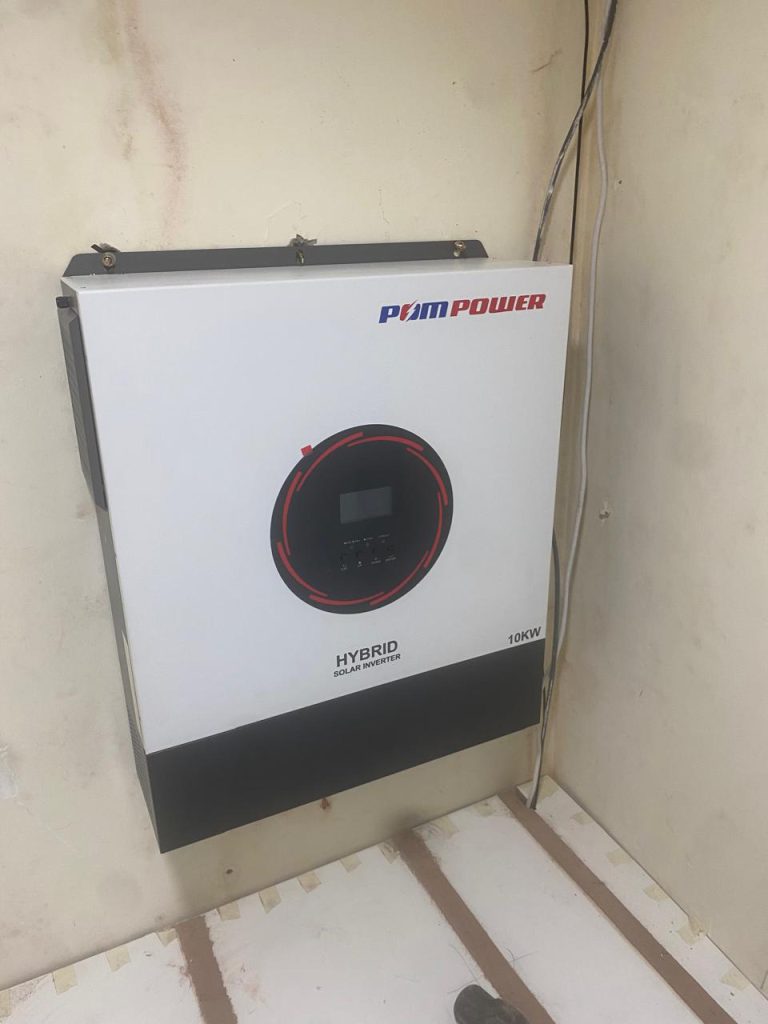
Hybrid Solar System
A hybrid solar system is a photovoltaic system that connects solar panels to both a lithium battery bank and the utility grid. During the daytime, the solar electricity generated by the panels is used to keep the loads running.
Solar panels
These modules are responsible for capturing photons present in the sunlight and converting them into direct current (DC).
Solar mounting structures
These are the mounts/stands on top of which the solar panels are placed.
Hybrid solar inverter
It converts DC to alternating current (AC), charges the batteries safely through built-in charge controllers, and if needed, converts AC from the grid to DC to charge batteries.
Grid and net meter
If the state DISCOM allows export, a bidirectional net meter records what’s taken from the grid and what’s sent back.
Battery bank
Batteries are used to store solar energy for later use at night or during power outages.
Solar accessories
These include AC and DC combiner boxes, AC and DC cables, MC4 solar connectors, earthing wires, and a lightning arrestor.
Advantages of Hybrid Solar Systems
- Backup during outages: When there’s a power cut, the battery keeps essential appliances running.
- Use solar day and night: During the daytime, solar energy charges the battery. That stored solar power can be used at night.
- Bill savings with flexibility: Solar energy first powers the loads. Then, if the batteries are discharged, solar energy charges the batteries. If DISCOM permits, excess power after batteries are charged can be exported to the grid. If export isn’t allowed, the system can still prioritise self-use.
- Clean, quiet backup: Hybrid solar systems do not use fossil fuel to generate electricity. Instead, they use solar radiation, which is completely green. Unlike a diesel generator, they don’t emit fumes or noise while operating.
- Protects sensitive loads: Many hybrid solar inverters smooth out voltage dips and switch over quickly during power cuts, which helps protect electronics.
Disadvantages of Hybrid Solar Systems
- Higher upfront cost: Batteries and a hybrid inverter make the hybrid PV system a lot pricier than on-grid solar systems in India.
- Longer payback period: Because the system costs more, it takes longer to recover your money through bill savings.
- Battery replacement cost: While solar panels last 20-25 years, batteries don’t. Expect battery replacement every 5-10 years during the system’s life.
- Energy loss in charging: Some energy produced by solar panels is lost every time while charging and discharging the battery. Hence, total savings are a bit lower in hybrid grid solar systems.
- Limited backup duration: Backup runs only as long as the battery lasts. Heavy use or many appliances will drain it faster.
- The entire home doesn’t have a backup during grid failure by default: Most installs back up only essential circuits. Big loads like ACs, heaters, or solar pumps may be excluded unless you size the system for them.
- More parts add more complexity: Extra wiring, settings, and approvals mean a longer install and more things to check over time.